
Missing teeth can affect much more than appearance. Many people notice changes in how they eat, speak, and feel throughout the day. When it comes to replacing missing teeth, dental implants and dentures are two of the most common treatment options—but patients often ask the same question first:
Which one feels more natural?
The answer depends on several factors, including comfort, stability, bone support, and long-term lifestyle preferences. Understanding how each option functions can help patients make a more informed decision about restoring their smile.
For people searching online for dental implants near me, knowing how implants compare to traditional dentures in daily life is often an important part of the decision-making process.
Understanding Traditional Dentures
Dentures are removable appliances designed to replace missing teeth.
They may replace:
- A few missing teeth
- An entire upper arch
- A full lower arch
Traditional dentures rest on top of the gums and are typically removable for cleaning and sleeping.
Modern dentures are more advanced than older versions, but they still rely heavily on gum support for stability.
What Are Dental Implants?
Dental implants are artificial tooth roots placed into the jawbone to support replacement teeth.
Unlike removable dentures, implants are fixed in place and designed to function more like natural teeth.
They may support:
- Single crowns
- Implant bridges
- Full-arch restorations
Because implants integrate with the jawbone, many patients describe them as feeling closer to natural teeth.
Stability During Eating and Speaking
One of the biggest differences between implants and dentures is stability.
Traditional dentures can sometimes shift while:
- Eating certain foods
- Speaking
- Laughing or coughing
This movement may make some patients feel self-conscious or uncomfortable.
Dental implants, on the other hand, are anchored into the jawbone, which helps create a more stable bite and reduces movement during daily activities.
Which Option Feels More Like Natural Teeth?
Many patients report that implants feel more natural because they are fixed securely in place.
This often allows for:
- More natural chewing pressure
- Improved speech clarity
- Less slipping or shifting
- Greater confidence during meals and conversations
Dentures can restore appearance and function effectively, but they may still feel different from natural teeth because they rest on the gums rather than being anchored in bone.
Jawbone Support and Facial Structure
Another major difference involves bone support.
When teeth are missing, the jawbone may gradually shrink over time due to lack of stimulation.
Dental implants help stimulate the jawbone similarly to natural tooth roots, which may help:
- Preserve bone structure
- Support facial shape
- Reduce long-term bone loss
Traditional dentures do not provide this same type of bone stimulation.
Comfort Over Time
Comfort varies from patient to patient, but dentures sometimes require adjustments as the gums and bone change shape over time.
Some denture wearers experience:
- Pressure spots
- Gum irritation
- Loosening over time
Implants generally remain more stable because they are anchored directly into bone rather than relying on gum support alone.
Chewing Strength and Food Choices
Many patients notice differences in chewing ability between the two options.
Dentures may limit certain foods because of movement or pressure on the gums.
Dental implants often allow patients to enjoy a wider variety of foods with:
- Better bite force
- Improved chewing efficiency
- More balanced pressure distribution
This can make daily eating feel more natural and comfortable.
Cleaning and Maintenance Differences
Dentures must be removed regularly for cleaning and overnight care.
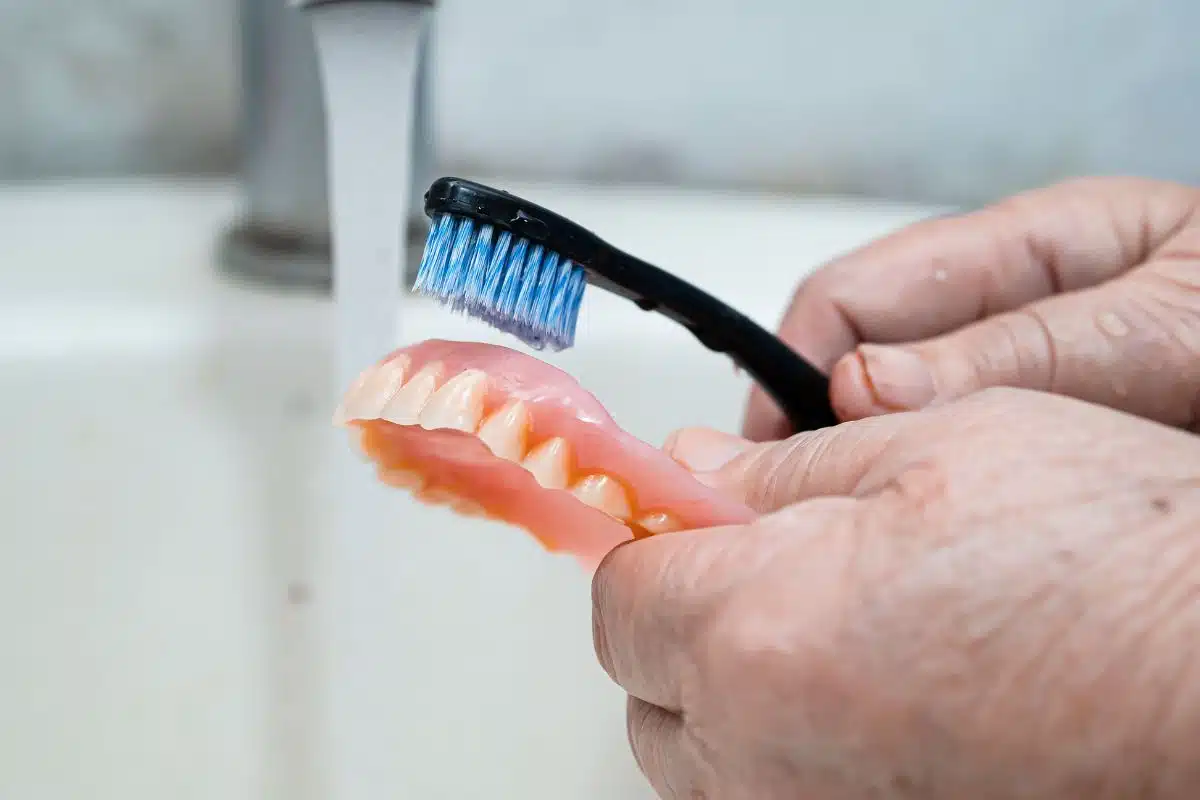
Dental implants are maintained more similarly to natural teeth through:
- Brushing
- Flossing
- Routine dental cleanings
While both require good oral hygiene, some patients prefer the convenience of fixed implant restorations.
Are Dentures Still a Good Option?
Yes. Dentures remain a valuable treatment option for many patients, especially depending on:
- Budget considerations
- Bone structure
- Overall oral health
- Number of missing teeth
For some individuals, dentures provide an effective and practical way to restore function and appearance.
Factors That Help Determine the Best Choice
The right option depends on several individual factors, including:
- Bone density
- Gum health
- Overall health history
- Lifestyle preferences
- Long-term goals
A professional evaluation helps determine which treatment may provide the best comfort and long-term function for each patient.
Tooth Replacement Options in Lubbock, Texas
Patients exploring tooth replacement options often want a solution that feels stable, functional, and comfortable in everyday life.
At Lubbock Perio & Implant Center in Lubbock, Texas, patients receive care focused on restoring missing teeth with treatment options designed around long-term oral health and comfort. Evaluations typically consider jaw health, lifestyle needs, and overall function when discussing implants or dentures.
For individuals searching for dental implants near me, understanding how different tooth replacement options feel in real-life situations can help make treatment decisions easier.
Schedule a Consultation
If you are considering options for replacing missing teeth and want to learn whether implants or dentures may better fit your lifestyle and comfort goals, a professional evaluation can help you understand the differences more clearly.
To schedule a consultation in Lubbock, Texas, contact us at (806) 589-4094.
FAQs
Do dental implants feel more natural than dentures?
Many patients say implants feel more like natural teeth because they are fixed securely in the jawbone.
Can dentures become loose over time?
Yes, dentures may loosen as gum and bone structure changes.
Are dental implants removable?
No, most dental implants are fixed in place and function similarly to natural teeth.
Which option is better for chewing?
Dental implants generally provide stronger chewing support and stability.
Can everyone get dental implants?
Not always. Bone density and overall oral health help determine implant eligibility.